
Laparoscopic Simulation Training: How VR and Box Trainers Actually Build Surgical Skill
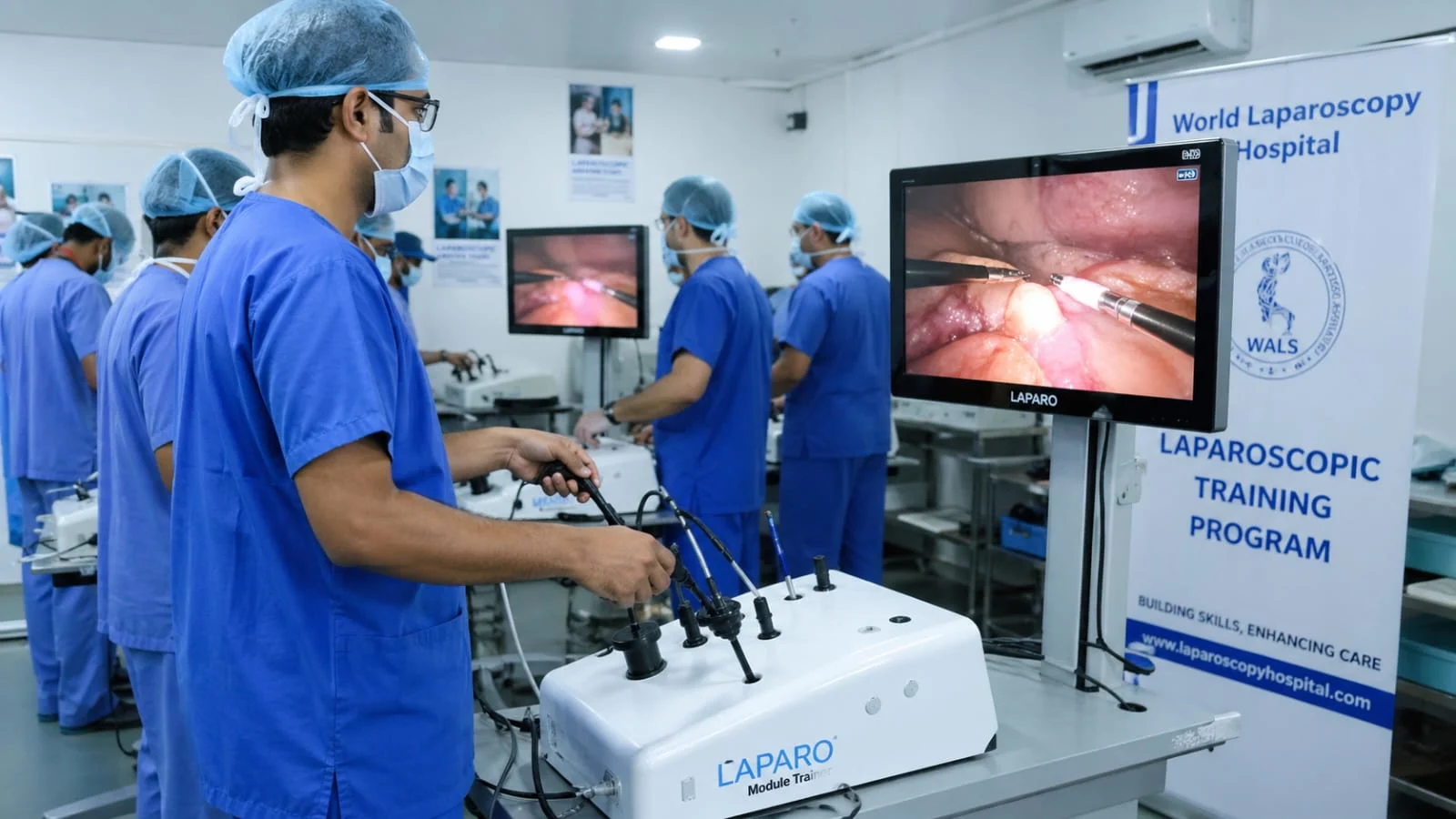
Laparoscopic simulation training is the fastest way for surgeons to develop real operative skill without risking patient safety. It works because it isolates technique, forces repetition, and provides immediate feedback—something live surgery rarely allows at scale. Studies consistently show simulation-trained surgeons perform faster and commit fewer early-stage errors.
A 2020 meta-analysis in Surgical Endoscopy reported up to a 40% reduction in technical errors among simulation-trained participants compared to traditional observation-based learning. That gap isn’t academic. It shows up in real operating rooms.
What is laparoscopic simulation training, and how does it work in practice?
At its core, laparoscopic simulation training recreates surgical tasks outside the human body. That sounds simple. It isn’t.
You’re dealing with inverted instrument movement, limited tactile feedback, and a 2D screen guiding 3D actions. Simulation environments—whether physical box trainers or VR systems—strip the procedure down to its mechanics so the brain can adapt.
In practice, trainees repeat the same task dozens of times in a single session. No waiting for case availability. No pressure from a live surgical timeline.
That density of repetition is the entire point.
Why do surgeons struggle without simulation-based training?
Here’s the uncomfortable truth. Watching surgery creates familiarity, not competence.
Without laparoscopic simulation training, most surgeons learn under real-case constraints. That slows everything down. Errors happen earlier. Corrections come later than they should.
A 2019 study in Annals of Surgery tracked residents trained without structured simulation. Their early procedural error rates were significantly higher, and their time to competency stretched far longer.
Learning in the operating room sounds logical. In reality, it’s inefficient.
How do box trainer and VR simulation systems differ?
Both tools fall under laparoscopic simulation training, but they train different layers of skill.
| Training Method | What It Teaches | Limitation |
|---|---|---|
| Box Trainer | Hand-eye coordination, instrument control | Limited realism |
| VR Simulation | Full procedural flow, error tracking | Higher cost |
| Hybrid Training | Combines both strengths | Requires structured setup |
Box trainers are physical. You feel resistance. You learn angles. VR systems simulate entire procedures and record performance metrics—time, accuracy, movement efficiency.
Neither replaces the other. Strong programs combine them.
Does laparoscopic simulation training actually improve surgical outcomes?
Yes—and this is where data matters.
A 2021 report from the Society of American Gastrointestinal and Endoscopic Surgeons (SAGES) found simulation-trained surgeons reached proficiency benchmarks 35% faster than those trained through observation alone.
Speed is one part of the story. Precision improves alongside it.
More interesting, though, is consistency. Surgeons trained through laparoscopic simulation training show less variation in performance under pressure. That stability is what senior surgeons notice first.
How does simulation help with intracorporeal suturing training?
This is where simulation proves its value almost immediately.
Intracorporeal suturing requires fine motor control and spatial awareness that most surgeons don’t naturally possess at the start. Practicing it during real surgery is slow and stressful.
Inside laparoscopic simulation training, that skill becomes repeatable.
You can fail 20 times in a row. Adjust. Try again. No consequences beyond time spent learning.
That’s also why strong programs connect simulation modules directly with hands-on laparoscopic training courses—simulation builds control, hands-on programs build execution under real conditions.
Can simulation replace live surgical training completely?
No. And anyone claiming that hasn’t trained surgeons.
Simulation builds mechanics. Live surgery builds judgment.
Still, skipping laparoscopic simulation training and jumping straight into live procedures increases risk and slows progress. The sequence matters more than the tools.
Simulation first. Controlled exposure second. Full procedures later.
How many hours of simulation training are actually needed?
There isn’t a fixed number, but research gives a useful benchmark.
A 2018 study in JAMA Surgery suggested surgeons need consistent repetition across 50–100 task cycles to reach stable performance in core laparoscopic skills.
That doesn’t translate directly to hours. It translates to volume.
Most structured laparoscopic simulation training programs are built around repetition targets, not time-based completion.
What makes some simulation training programs ineffective?
This is where many courses fail quietly.
They provide access to tools, not structured progression.
Without feedback, repetition becomes guesswork. Without increasing difficulty, improvement plateaus early.
Effective laparoscopic simulation training programs include correction loops. You perform. You get feedback. You repeat with adjustment.
That loop is where real learning happens.
How does simulation training connect to advanced laparoscopic training centers?
Advanced institutes don’t treat simulation as optional. They build entire curricula around it.
Programs offering FMAS or diploma pathways often integrate laparoscopic simulation training before live surgical exposure. That sequencing shortens learning curves and improves outcomes.
This is also where interlinking matters for your site structure—simulation training connects naturally to:
- advanced laparoscopic training center
- hands-on laparoscopic training courses
- intracorporeal suturing training
Together, they form a complete learning pathway rather than isolated topics.
FAQ
What is laparoscopic simulation training?
Laparoscopic simulation training is a structured method where surgeons practice surgical techniques using box trainers or virtual reality systems. It allows repetition without patient risk and focuses on building coordination, precision, and procedural control before entering real surgical environments.
How effective is simulation training for surgeons?
Research shows simulation-trained surgeons reduce early-stage technical errors by up to 40%. They also reach proficiency faster and demonstrate more consistent performance compared to those trained through observation-based methods alone.
What is the difference between VR and box trainers?
Box trainers focus on physical coordination and instrument handling, while VR systems simulate complete procedures with performance tracking. Both tools serve different purposes and are most effective when used together in structured training programs.
Can beginners start directly with simulation training?
Yes. Simulation is often the best starting point for beginners. It allows them to build foundational skills without the pressure or risk associated with live surgical procedures, making early learning more efficient and controlled.
How long should simulation training last?
There is no fixed duration. Most surgeons require 50 to 100 repetitions of core tasks to achieve stable performance. Effective programs measure progress based on skill consistency rather than total hours spent.
Does simulation training improve real surgery performance?
Yes. Simulation-trained surgeons perform faster, make fewer errors, and adapt better during live procedures. The skills developed during training transfer directly to operating room performance.
Is simulation training enough without live practice?
No. Simulation builds technical ability, but live surgical training develops judgment and decision-making. Both are required for complete surgical competency.
What skills are learned in simulation training?
Skills include instrument control, camera navigation, suturing, knot tying, and procedural coordination. These form the foundation of all laparoscopic surgical procedures.
Are simulation-based courses expensive?
Costs vary depending on the technology used. VR systems are generally more expensive than box trainers, but both offer strong value when integrated into structured learning programs.
Who should take laparoscopic simulation training?
Medical students, surgical residents, and experienced surgeons transitioning to minimally invasive techniques all benefit from simulation training. It accelerates skill acquisition across all experience levels.
Conclusion
Simulation changes how surgeons learn. It removes risk, increases repetition, and compresses years of slow progress into focused training cycles.
The difference isn’t subtle. Surgeons who train this way don’t just improve faster—they perform with more consistency when it actually matters.