ProcurementNation.com Drop Shipping: Smart Supply Chain Blueprint
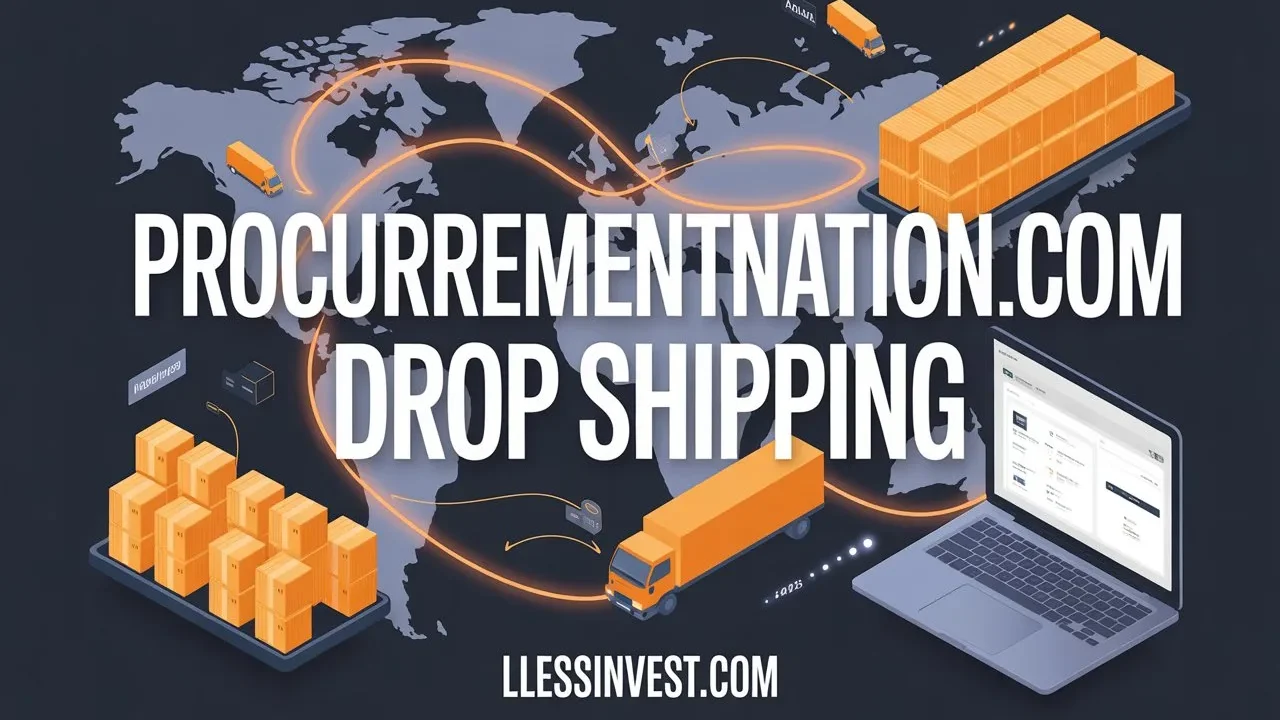
Drop shipping is no longer just a quick way to make money online. It has grown into a serious supply chain model. In 2026, smart sellers do not only focus on selling. They focus on procurement.
Procurement-led drop shipping means you control supplier quality, pricing, risk, and logistics before you list products. You think like a supply chain manager, not just a store owner.
Traditional drop shipping depends on random suppliers. Procurement-led systems build verified supplier networks, cost models, and logistics plans. This reduces risk. It improves profit. It builds trust.
This is where ProcurementNation.com drop shipping stands out. It shifts the focus from “find product and sell” to “build a controlled supply ecosystem.”
That shift is the future.
The Evolution of Drop Shipping: From Side Hustle to Scalable Supply Chain Model
A few years ago, drop shipping was simple:
- Find a trending product
- List it on a store
- Run ads
- Hope it ships on time
Now things are different.
The global drop shipping market is projected to cross $370+ billion. That means competition is stronger. Customers expect faster delivery. Payment processors monitor fraud more closely.
Modern drop shipping includes:
- Supplier contracts
- Performance dashboards
- Automated order routing
- Risk scoring
- Predictive shipping models
- ERP integration
Platforms like Shopify and WooCommerce are now integrated with advanced automation tools.
What changed?
E-commerce matured. Logistics matured. Data matured.
Now it is a supply chain business.
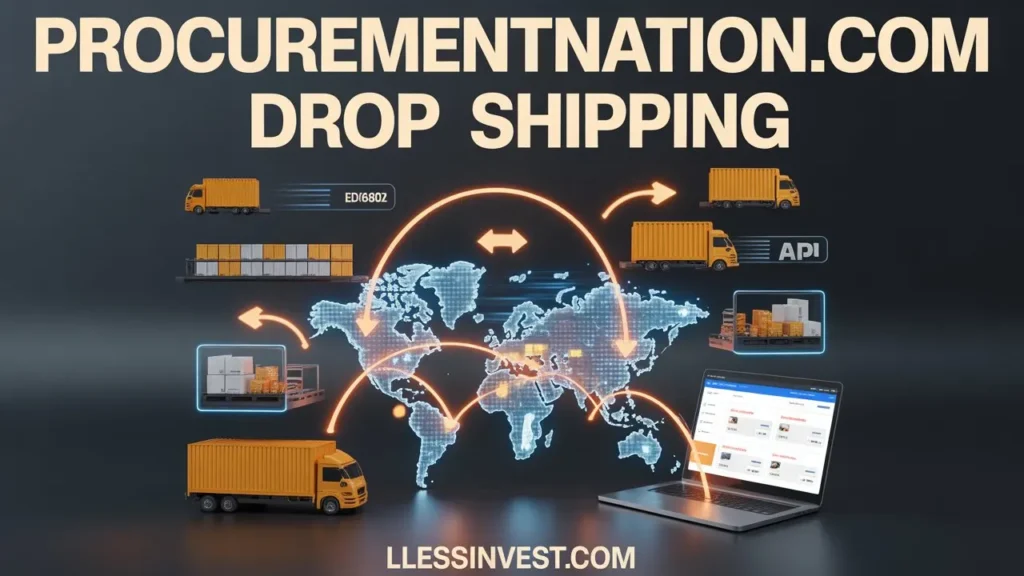
How ProcurementNation.com Redefines Traditional Drop Shipping Infrastructure
Traditional model:
- Retailer depends fully on supplier
- No cost visibility
- No risk assessment
- Manual communication
Procurement-led model:
- Supplier scoring system
- Contract negotiation
- Freight planning
- Data-driven pricing
- Risk buffers
ProcurementNation.com drop shipping focuses on structured sourcing.
Instead of relying only on large marketplaces like Alibaba or AliExpress, procurement teams verify:
- Production capacity
- Lead time stability
- Historical defect rates
- Compliance documents
- Insurance coverage
This creates long-term stability.
Operational Workflow: From Supplier Sourcing to Final Delivery
Here is the full operational chain:
- Market demand validation
- Supplier discovery
- Supplier audit
- Price negotiation
- Sample testing
- Contract agreement
- API integration
- Customer order capture
- Order auto-routing
- Warehouse dispatch
- Last-mile delivery
- Return management
Each step must be measured.
When one step fails, the whole system breaks.
Supplier Intelligence & Verification Framework
Supplier Performance Scoring
Every supplier should have a score based on:
- On-time shipment rate
- Product defect rate
- Communication speed
- Capacity stability
- Return acceptance rate
Example Score Table:
| Metric | Weight | Target |
|---|---|---|
| On-time shipping | 30% | 95%+ |
| Defect rate | 25% | <2% |
| Lead time accuracy | 20% | Stable |
| Communication | 15% | <24 hrs |
| Return handling | 10% | Smooth |
Risk Profiling
Suppliers are classified:
- Low Risk
- Moderate Risk
- High Risk
Risk factors include:
- Financial stability
- Country export restrictions
- Political instability
- Currency volatility
Compliance Screening
Check for:
- Import/export licenses
- Product certifications (CE, FCC if required)
- Tax registration
- Trade documentation
Without compliance, shipments get stuck at customs.
Cost Structure Breakdown: Understanding True Profit Margins
Many beginners only calculate product cost.
That is dangerous.
Here is the real breakdown:
Product Cost
Wholesale purchase price.
Shipping Cost
Includes:
- Freight
- Fuel surcharge
- Last-mile cost
- Packaging
Payment Gateway Fees
Stripe, PayPal, and others take 2–3% plus fixed fees.
Marketing Cost
Paid ads, influencer fees, email tools.
Return Cost
Refunds
Reverse shipping
Restocking loss
Hidden Operational Expenses
- Software subscriptions
- Chargeback fees
- Customer support staff
- Currency exchange loss
- Customs duty
Example Profit Formula:
Net Profit = Revenue – (Product + Shipping + Payment Fees + Marketing + Returns + Hidden Costs)
Without full cost visibility, margins look fake.
Automated Fulfillment Architecture: How Orders Flow Without Manual Errors
Modern systems use:
- API order sync
- Real-time stock visibility
- Automated tracking upload
- Address verification
Orders flow from store to supplier automatically.
ERP systems connect inventory, accounting, and logistics.
Automation reduces:
- Manual typing errors
- Shipping delays
- Customer complaints
This is not optional in 2026.
Global vs Localized Fulfillment Strategy
Global Fulfillment
- Lower product cost
- Longer shipping time
- Higher customs risk
Localized Fulfillment
- Faster delivery
- Higher storage cost
- Better customer trust
Hybrid models win.
Many sellers use U.S.-based 3PL warehouses while sourcing from Asia.
That balances speed and cost.
Advanced Logistics Optimization Techniques
Shipment Consolidation
Combine multiple small shipments into one larger shipment.
Saves freight cost.
Dimensional Weight Optimization
Carriers charge based on size, not just weight.
Reduce packaging size to cut cost.
Predictive Freight Planning
Use past data to forecast shipping demand.
Plan container space early.
Avoid peak season rate spikes.
Sustainable & Green Drop Shipping: Carbon Reduction and Eco-Sourcing Models
Consumers care about the environment.
Green practices include:
- Eco-friendly packaging
- Carbon offset programs
- Regional sourcing
- Reduced air freight
Sustainable sourcing also reduces long-term cost risk.
Brands that ignore sustainability lose trust.
AI & Data Analytics in Modern Drop Shipping Decision-Making
AI tools help with:
- Demand forecasting
- Fraud detection
- Price optimization
- Supplier performance prediction
Machine learning models analyze:
- Customer buying behavior
- Shipping delay patterns
- Return reasons
Data replaces guesswork.
Drop Shipping Risk Management Framework
Drop shipping looks simple. But risk hides behind speed.
A strong risk framework protects cash flow, reputation, and payment accounts.
Supplier Default Risk
A supplier may:
- Run out of stock
- Shut down suddenly
- Increase prices without notice
Prevention steps:
- Keep backup suppliers
- Maintain safety margin pricing
- Use written agreements
- Monitor monthly performance score
Never depend on one source.
Shipping Delays
Delays happen due to:
- Port congestion
- Weather
- Peak season overload
- Customs inspections
Solution:
- Use multi-carrier strategy
- Offer realistic delivery windows
- Add tracking automation
- Use local fulfillment for top products
Chargebacks
Chargebacks hurt profit and payment processor trust.
Common causes:
- Late delivery
- Poor tracking
- Product not as described
Prevention:
- Clear product pages
- Fast tracking updates
- Refund before dispute escalates
- Fraud screening tools
Customs Clearance Issues
Customs stops goods if:
- Documents are incomplete
- Product certifications are missing
- Declared value looks suspicious
Prevention:
- Correct HS codes
- Verified invoices
- Proper labeling
- Work with experienced freight forwarders
Fraud Prevention
Fraud drains revenue.
Warning signs:
- Multiple high-value orders from same IP
- Mismatched billing and shipping address
- Suspicious email patterns
Use fraud scoring tools and manual review for large orders.
Risk management is not optional. It protects the entire system.
Legal, Tax & Cross-Border Compliance Considerations
Many sellers ignore legal rules. That is a big mistake.
You must understand:
- Sales tax rules
- VAT for EU orders
- Import duties
- Product safety regulations
- Data privacy laws
If selling in the U.S., track state nexus rules.
If selling in Europe, understand VAT registration thresholds.
If handling customer data, follow privacy regulations.
Compliance protects long-term growth.
Inventory-Less Doesn’t Mean Risk-Less: Hidden Operational Challenges
People think drop shipping has no inventory risk.
That is not true.
Hidden challenges include:
- Supplier stockouts
- Sudden price changes
- Quality inconsistency
- Long dispute resolution time
Even without inventory, you carry responsibility.
Customer blames you. Not the supplier.
This is why ProcurementNation.com drop shipping focuses on supplier contracts and risk control.
E-Commerce Platform Integration Ecosystem
Modern systems rely on integrations.
Shopify
Shopify offers:
- App integrations
- Payment gateway connections
- Automated fulfillment plugins
It supports API-driven supplier routing.
WooCommerce
WooCommerce allows:
- Custom plugin flexibility
- ERP sync
- Advanced automation
ERP Integration
ERP systems connect:
- Orders
- Finance
- Supplier payments
- Inventory tracking
This improves accuracy.
API Automation
API automation ensures:
- Real-time stock updates
- Tracking sync
- Pricing updates
Manual work causes errors. Automation reduces risk.
Performance Metrics That Actually Matter
Many sellers track vanity numbers.
Real metrics are different.
Fulfillment Time
From order to shipment.
Target: Under 48 hours.
Return Rate
High returns mean product or expectation problem.
Target: Under 5%.
Supplier Defect Rate
Tracks quality control.
Target: Under 2%.
Customer Lifetime Value (CLV)
Total revenue from one customer.
Higher CLV means strong brand trust.
Net Profit Margin
After all costs.
Target depends on niche. But healthy margin is 15–30%.
Measure weekly. Improve monthly.
Scaling Strategy: Moving From $1,000 to $100,000 Monthly Revenue
Scaling is structured.
Stage 1: Product Validation
- Test with small budget
- Validate demand
Stage 2: Process Stabilization
- Automate order flow
- Secure backup suppliers
Stage 3: Cost Optimization
- Negotiate bulk pricing
- Improve shipping contracts
Stage 4: Brand Building
- Email marketing
- Repeat buyers
- Customer loyalty
Stage 5: Multi-Channel Expansion
- Add marketplaces
- Expand globally
Scaling without control leads to collapse.
Procurement-led growth is stable growth.
ProcurementNation vs Conventional Marketplaces: Structural Comparison
| Factor | Conventional Model | Procurement-Led Model |
|---|---|---|
| Supplier control | Low | High |
| Pricing stability | Weak | Negotiated |
| Risk monitoring | Minimal | Structured |
| Data analysis | Basic | Advanced |
| Logistics planning | Reactive | Predictive |
| Profit clarity | Unclear | Fully calculated |
ProcurementNation.com drop shipping builds systems.
Traditional marketplaces focus on speed.
Systems win long term.
Real Business Case Studies & Performance Benchmarks
Case Study 1: Home Accessories Store
- Initial revenue: $3,000/month
- Problem: 18% return rate
- Solution: Supplier re-scoring and packaging upgrade
- Result: Return rate reduced to 6%, margin increased by 12%
Case Study 2: Fitness Niche Brand
- Shipping delays averaging 15 days
- Shifted to hybrid fulfillment
- Delivery reduced to 5–7 days
- Conversion rate improved by 22%
Benchmarks for 2026:
- On-time delivery: 95%+
- Refund rate: Under 5%
- Net margin: 20% average
- Repeat purchase rate: 25%+
Common Strategic Mistakes That Destroy Drop Shipping Businesses
- Relying on one supplier
- Ignoring shipping times
- Underestimating return costs
- Poor product descriptions
- No financial tracking
- Scaling ads without logistics control
- Ignoring compliance
Most failures are operational, not marketing.
Building a Competitive Advantage Through Procurement-Led Sourcing
Competitive advantage comes from:
- Exclusive supplier agreements
- Private labeling
- Bulk pricing contracts
- Faster local shipping
- Higher quality control
When competitors fight on ads, you win on structure.
Procurement creates barriers others cannot easily copy.
Customer Experience Optimization in Drop Shipping
Customer experience drives repeat sales.
Focus on:
- Transparent delivery times
- Fast response support
- Easy returns
- Real-time tracking
Add:
- Order confirmation emails
- Shipping updates
- Post-purchase follow-up
Trust builds brand value.
Reverse Logistics & Return Automation System
Returns are part of business.
Strong reverse logistics includes:
- Automated return labels
- Clear policy page
- Local return hubs
- Fast refund processing
Track return reasons:
- Wrong size
- Damaged item
- Late delivery
- Not as described
Fix root cause.
Returns should improve operations, not destroy profit.
Future Outlook: What the $370+ Billion Drop Shipping Market Means for Entrepreneurs
The market is growing fast.
But easy money is gone.
Future winners will:
- Use data
- Secure suppliers
- Automate fulfillment
- Manage risk
- Build real brands
ProcurementNation.com drop shipping represents structured growth.
Entrepreneurs who think like supply chain managers will dominate.
FAQs
1. Is drop shipping still profitable in 2026?
Yes. But only with strong cost control and supplier verification.
2. How important is supplier scoring?
Very important. It reduces defect rate and shipping delays.
3. What is a healthy net margin?
Between 15% and 30%, depending on niche.
4. Should I use global or local suppliers?
Hybrid model works best for balance.
5. How can I reduce return rates?
Improve product descriptions and supplier quality.
6. Is automation necessary?
Yes. Manual systems fail at scale.
7. What is the biggest hidden cost?
Returns and chargebacks.
8. Can I scale without ERP?
Small scale, yes. Large scale, no.
9. How do I protect against fraud?
Use fraud scoring tools and manual review for high-risk orders.
10. What makes procurement-led models stronger?
Control. Data. Negotiation power.
11. How long does it take to scale to $100K/month?
With strong system and capital, 6–18 months is realistic.
12. What is the biggest risk in cross-border drop shipping?
Customs delays and compliance issues.
Final Thoughts
Drop shipping in 2026 is not about trends.
It is about systems.
It is about supplier intelligence.
It is about logistics control.
It is about cost transparency.
ProcurementNation.com drop shipping focuses on building a structured supply chain instead of chasing quick wins.
That is the difference between short-term profit and long-term success.